“The baby has acute hypoxia — we need to cut now!”
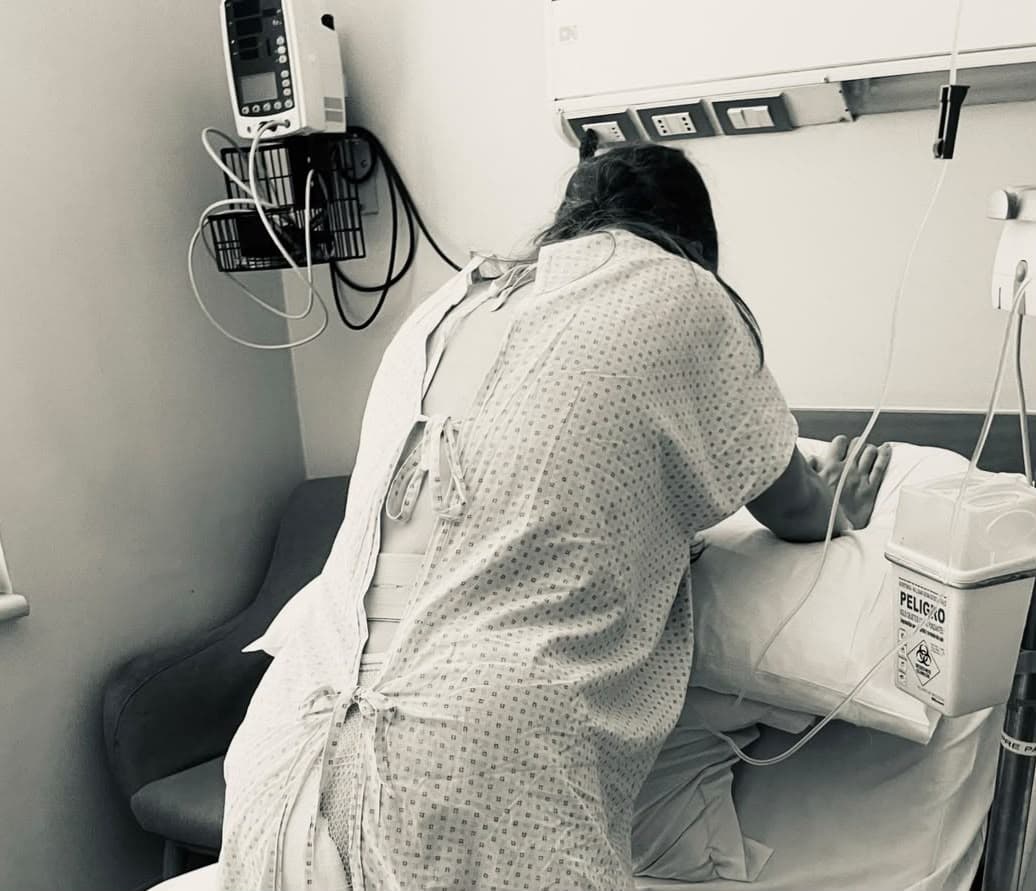
The most frightening words in the pushing stage
This is, perhaps, the most frightening phrase a woman can hear while she is pushing. In that moment, fear for the baby tightens her whole body. Did you know that in most cases a drop in heart rate during a push is normal physiology — not a reason to panic?
- Let us look at how to tell a natural reaction from real danger.
Why the pulse drops — that is normal
As the baby's head moves through the birth canal, the pelvic bones and muscles compress it in a natural way. At that moment the vagal reflex fires: at the peak of a contraction the heart rate may gently fall from 140 to 80–90 beats per minute.
This is not suffocation. It is an inborn protective mechanism: the baby's cardiovascular system is conserving oxygen under mechanical pressure.
The main rule: look at the pause
The gold standard for assessing the baby's condition is what happens between contractions, when the uterus is soft:
- Healthy adaptation: the push ends, the belly softens — and within 10–15 seconds the baby's pulse returns to its normal 120–150 beats per minute. The baby is coping well, no matter how many times the pulse dips during a push.
- True acute hypoxia: the push has passed, the uterus is soft, and the heart does not recover — it stays at 60–80 beats per minute through the whole pause.
How “hypoxia” is created in the birth room
Very often the alarm is provoked by the conditions of the room itself:
- The woman moves during a push: the CTG sensor slips, or it picks up the pulse of the mother's abdominal aorta (about 70 beats per minute).
- A command follows: “Don't move, lie on your back — we can't record the CTG!”
- The weight of the pregnant uterus compresses the inferior vena cava, blood flow to the placenta falls — and then a real iatrogenic hypoxia begins, caused by the position itself.
When is an episiotomy truly needed?
Only when true distress is confirmed:
- In the pause between pushes the heart rate does not recover.
- An urgent change of position (onto the left side or onto all fours) has not helped.
In every other case, the best thing the team can do is let the woman change position, breathe deeply, and not interfere with physiology.
Routine episiotomy and the limits of CTG
The routine use of episiotomy — as a doctor's habitual practice — is regarded in modern obstetrics as a genuine expression of ignorance toward the woman. More than that, episiotomy is often unjustified, because the baby's heart-rate drop is episodic and recovers easily between pushes.
Continuous CTG monitoring also causes discomfort: with every contraction and every push the volume of the abdomen objectively decreases, and the CTG sensors usually slip, however modern the clinic's technology may be. There is always a margin of error in CTG during labour. Continuous monitoring can also do harm if the doctor is impatient: the first drop in heart rate is taken for pathology, and an episiotomy follows.
Lying flat on the back is convenient for the doctor, but not for the woman. As this article shows, it also creates the risk of false CTG readings: the mother's inferior vena cava is compressed, blood flow to the placenta falls, and the conditions for hypoxia are created by the position itself.
So prepare for birth! Study the material, choose your team carefully, and meet that day with more awareness.